LATTICE
2-player connection. Adjacent moves only. Pure tempo.
2-player connection game. Place stones on a hex grid trying to connect opposite sides. Twist: you can only place stones adjacent to your opponent's last move. Forces tempo and counter-tempo. Hex/Y DNA, transformed.
Every move forces opponent's next zone of play. Lure them into corners, and your true threats emerge.
The Roles
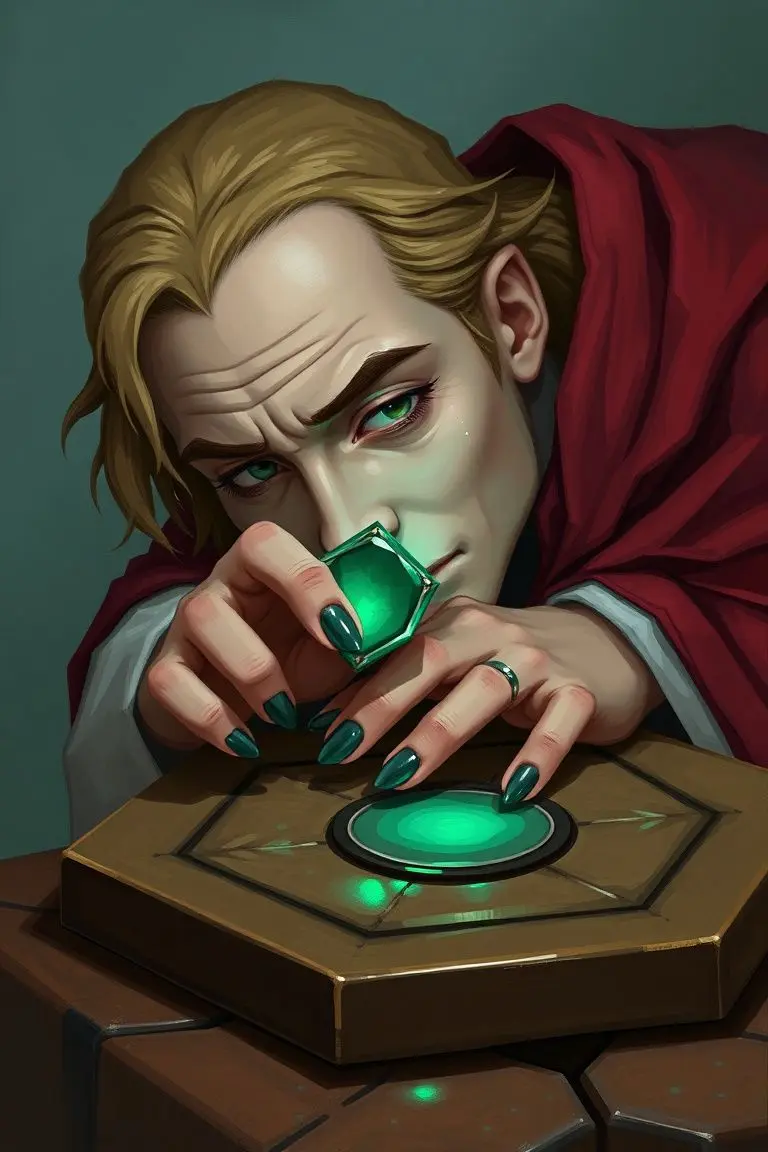
Connector
Tries to connect their two opposite sides with an unbroken chain. Must place adjacent to opponent's last move.
How a Round Plays
First move
First player places anywhere.
Adjacent reply
Subsequent moves must be adjacent to opponent's last move.
Connect
Build an unbroken chain from your edge to the opposite edge.
Win Conditions
Connector
Connect your two opposite sides with an unbroken chain.
Designer's Notes
Classic Hex/Y connection-game DNA, but the "must place adjacent" rule transforms it. Every move is reactive but you're trying to set up traps. Very low rule complexity, very high skill ceiling. Pure strategy.
Strategy
- 01Lure to the edgeA move on the rim forces opponent to a small adjacency set.
- 02Threaten two chainsA single stone that completes either of two chains is unstoppable.
- 03Lattice is local AND globalYou're solving a local adjacency puzzle while shaping a global graph.
No Luck.
No Fog.
Only Cost.
Pass the device around the table, or open a remote room and play cross-device. Either way, every move is yours alone.
About Lattice
2-player connection game. Place stones on a hex grid trying to connect opposite sides. Twist: you can only place stones adjacent to your opponent's last move. Forces tempo and counter-tempo. Hex/Y DNA, transformed.
2-2 players (best with 2) · 10–20 min · Pure Strategy
How a round plays out
First move
First player places anywhere.
Adjacent reply
Subsequent moves must be adjacent to opponent's last move.
Connect
Build an unbroken chain from your edge to the opposite edge.
Roles
- Connector(2)
- Tries to connect their two opposite sides with an unbroken chain. Must place adjacent to opponent's last move.
How to win
- Connector
- Connect your two opposite sides with an unbroken chain.
Tips for new players
- Lure to the edge
- A move on the rim forces opponent to a small adjacency set.
- Threaten two chains
- A single stone that completes either of two chains is unstoppable.
- Lattice is local AND global
- You're solving a local adjacency puzzle while shaping a global graph.
What makes it interesting
Classic Hex/Y connection-game DNA, but the "must place adjacent" rule transforms it. Every move is reactive but you're trying to set up traps. Very low rule complexity, very high skill ceiling. Pure strategy.
Every move forces opponent's next zone of play. Lure them into corners, and your true threats emerge.