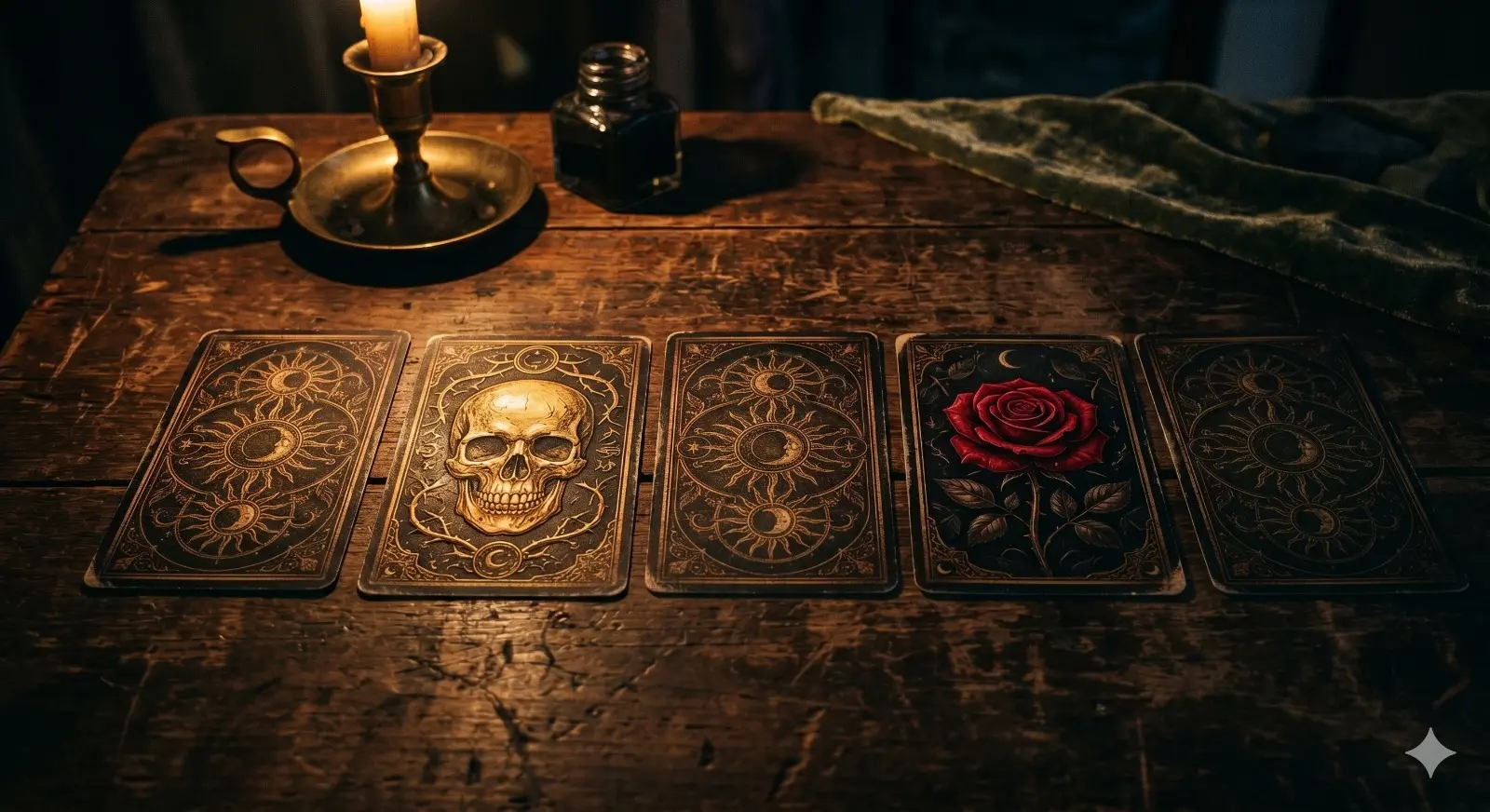
SKULL
Flowers hide in shadows. One card ends it all. Bid, bluff, and pray.
Deal Cards
Each player gets 3 Flower cards and 1 Skull card. Place one face-down to start.
Place or Bid
On your turn: add another card to your pile — or dare to bid. Name how many flowers you can reveal across all piles.
Raise or Pass
Other players must raise your bid or fold. The highest bidder is locked in and must attempt the reveal.
Reveal
Flip YOUR own cards first, then choose whose to reveal next. All flowers? Score a point. Hit a skull? Lose a card at random.
First to score 2 successful bids wins the round. Lose all 4 cards and you're eliminated.
Two cards. Infinite mind games.
Skull strips bluffing down to its raw essence. No complex rules, no long setup — just the tension of not knowing whether the card your opponent placed is a harmless flower or the skull that ends your bid.
It's the game that never gets old, because the real game is reading the person across from you.
Ready to bluff?
One device for the table, or play online with friends anywhere. No downloads needed.
How to play Skull
Skull is a bluffing game of almost unfair simplicity. Everyone holds three flowers and one skull. You place discs face down, then bid on how many you can flip without hitting a skull. Win two rounds and you win. It plays 3-6 people in about 15-30 minutes and almost all of it happens in the pause before someone bids.
Everyone places a disc face down
Each player starts with three flowers and one skull. Going round, everyone places one disc face down onto their own stack. Nobody sees what anyone placed — in pass-and-play the placement is hidden from the next player.
Place more, or start the bidding
Play continues round the table, adding discs, until someone opens the bidding instead of placing. The bid is a number: how many discs they claim they can flip without turning up a skull.
Raise or pass
Players either raise the bid or pass out of the round. Once everyone but one player has passed, the highest bidder must attempt what they promised.
Flip your own stack first
The bidder must flip every disc in their own stack before touching anyone else's. This is the rule that makes the game — you cannot bid high on the strength of your own safe flowers without exposing your own skull first.
Succeed and you score, fail and you lose a disc
Flip the promised number of flowers and you win the round. Hit a skull and you lose one of your discs, chosen at random. Lose all your discs and you are out. First to win two rounds takes the game.
Tips and strategy
- Placing your skull early is aggressive and readable. Placing it late is safer but leaves you holding it when the bidding starts.
- Bidding a number that forces you through your own entire stack is a strong bluff precisely because it looks reckless.
- Watch who stops placing. A player who suddenly wants to bid has usually just placed a skull and wants the round resolved.
- Passing costs you nothing directly. Early in a game, letting someone else fail is often better than proving you were right.
- If a player has only one disc left, everyone knows exactly what it might be. Use that.
Frequently asked questions
- How do you win at Skull?
- Win two bidding rounds. You win a round by successfully flipping the number of flowers you bid, starting with your own stack, without revealing a skull.
- How many players do you need for Skull?
- Three to six. It is tightest at four or five, where there are enough stacks to make bidding genuinely risky.
- What happens when you flip a skull?
- Your attempt fails immediately and you lose one of your four discs at random. Losing every disc eliminates you from the game.
- Why must you flip your own discs first?
- It stops players bidding safely on other people's stacks. Committing to a high bid means walking through your own pile first, which is where your skull might be waiting.